
This article has been updated to reflect the 2026-2030 DP Code of Points changes.
What are the “intangibles” that can elevate your routine to the top? Every optional gymnastics routine is evaluated, at the end, on several general categories. These categories can result in general deductions for the routine, if there are deficits in these areas. Most routines receive a deduction in at least one of these areas. But what are the categories, and what can a gymnast do to avoid these deductions?
Let’s find out.
What are general deductions?
General deductions in gymnastics are a set of deductions that are applied at the end of the routine. These deductions are taken “overall”, or in relation to the entire routine. They do not apply just to one skill.
Often, a judge will make notes on their paper throughout the routine, to determine if a general deduction should be taken. An example would be rhythm deductions. Let’s say that the gymnast pauses frequently during her beam routine, and the routine does not flow smoothly. The judge might note an “R” on their paper each time the gymnast’s rhythm is poor. Then, the judge would deduct at the end of the routine based on how many “R”s were written down.
List of General Deductions
The general deductions that can be taken during an optional routine are as follows:
- Dynamics
- Rhythm
- Choreography
- Musicality
- Expression
- Body Posture
- Footwork
- Sureness
Now, let’s take a closer look at each of these categories.
Dynamics
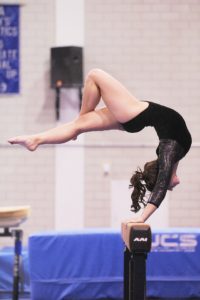
The deduction for insufficient dynamics is up to 0.20. When I am judging, I will write a small “D” on my paper if the gymnast has areas of the routine that look sluggish. The dynamics deduction can be taken on every event. (Vault is not discussed in this article, but the dynamics deduction is higher there, up to 0.30.)
Dynamics on Bars
On bars, there are three components of the dynamics deduction. These components are: 1) insufficient swingful execution; 2) energy not maintained; 3) fails to make difficult look effortless.
Swingful execution? What does that mean? When I look at a bar routine, the gymnast’s swing should look natural and easy. If she labors to get over the top in a giant swing, performs jerky-looking kips, or needs to segment her body to increase her swinging amplitude, this could lead to a dynamics deduction.
Similarly, sometimes the gymnast seems to fizzle out toward the end of the routine. The final skills look tired and slow. Sometimes a person watching might wonder if she’s going to make it through. That’s a dead giveaway that she could get a deduction for dynamics.
Finally, the difficult skills should look easy. If the gymnast has a lot of errors during her hardest skills, she will, of course, get deducted for those errors. But if the mistakes make the tough skills look like they’re too hard for her, a dynamics deduction is possible as well.
Dynamics on Beam and Floor
Dynamics deductions also apply on beam and floor. The latter two categories from above are considered when the judge decides whether to take a dynamics deduction.
On beam and floor, the routine should look crisp and clean. The gymnast should show energy and spark throughout the routine. Here are some examples of dynamics problems: gymnast is looking down a lot, does not fully extend in her positions, does not exude energy, or looks sluggish or tired. Just like on bars, the gymnast should maintain this energy until the completion of the routine. Sometimes, the last tumbling pass looks labored, or the gymnast’s momentum seems to “die out” toward the end. In those instances, she could incur a dynamics deduction.
Showing insufficient flexibility can also contribute to a dynamics deduction. Insufficient flexibility can be deducted in a variety of ways. First, if the gymnast performs kicks that are low and lacking in amplitude, this deduction applies. Also, if a non-value part split is performed, such as on floor, a full 180° split is expected. When the gymnast performs a split that is not flat on the floor, a deduction in this category can be taken. Choreography pieces such as straddle rolls on the floor should also show a full split in order to avoid deductions.
Rhythm/Tempo/Musicality
The “rhythm and tempo” deduction is only applied on beam, but a similar deduction exists on floor called “musicality”. This section will describe these deductions and how they are applied.
Rhythm and Tempo
The rhythm and tempo deduction is up to 0.20 for a beam routine. The 0.20 is divided into two deductions:
- Insufficient variation in rhythm and tempo in non-value parts: Up to 0.10
- A series of disconnected movements, appears fragmented and lacks continuity: Up to 0.10
The key word in the first part of this deduction is “variation”. A routine with good rhythm will have portions that move more slowly, and portions that move quickly. The gymnast should transition between slow and fast movements smoothly. Awkward starts and stops could cause the gymnast to get a rhythm deduction.
The second part of the deduction refers to the “flow” of the routine. The gymnast should keep her routine moving, without pauses or stops between skills or choreography segments. Concentration pauses of 2 seconds or longer are a separate deduction, but smaller pauses would fit under the general rhythm category.
Musicality
The deduction for musicality on floor is also up to 0.20.
Musicality refers to rhythm in relation to the music. The gymnast’s movements should go along with the music, and flow naturally in time with the music. The best routines will convey a theme through the music and related movements.
Just like on beam, the gymnast should show variety in the rhythm of the routine. There should be smooth transitions between different parts of the routine. The gymnast should not show long pauses before or after acro passes.
Expression
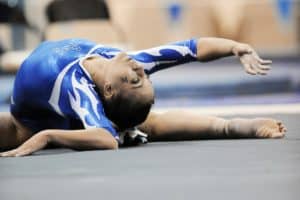
Expression, which was previously part of the artistry deduction, is now a standalone deduction in the current Code of Points. It describes the gymnast’s ability to present her routine to the audience and judges. The deduction for expression is up to 0.20.
The routine should have a performance quality that engages the judges and the audience. It should pull them in and make them want to watch the rest of the routine. It can be very helpful for the gymnast to make eye contact with certain people or points during the routine. The gymnast should make the judges and crowd sit up and say, “Wow, that was cool!”
Facial expressions should be used to help convey the theme of the routine. This could involve dramatic changes in the gymnast’s facial expression, but it doesn’t have to. The important thing is that the gymnast’s facial expressions match the music and choreography. Smiling is great when it works with the routine, but it is not required!
Take a look at this article for more detail on how to demonstrate artistry and expression in gymnastics.
Choreography
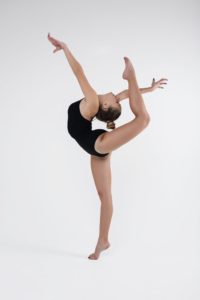
The other piece of the previous artistry deduction was choreography, which is also now its own deduction. The choreography deduction is split into three parts, which are different on beam and floor.
Choreography on Beam
The choreography deduction on floor is worth a total of up to 0.40. There are three components to this deduction:
- Lack of purposeful choreography: Up to 0.20
- Choreography performed in all directions: Up to 0.10
- Lack of variety of focus changes, poses, phrases, and connections: Up to 0.10
Lack of purposeful choreography on beam is characterized by unchoreographed movements. These could be foot movements when preparing for a big skill, tapping the end of the beam with the foot to check positioning, and any movements in which the entire body is not choreographed. Some gymnasts will miss an acro series, and in attempting it again, they simply walk to the right spot without much choreographic activity. This would be an example of lack of purposeful choreography.
The gymnast is expected to perform choreography in 3 directions on the beam: forward, backward, and sideward. Almost all routines have forward movement, so this deduction refers to routines that are lacking sideward and/or backward movement. Each movement that is missing will result in a 0.05 deduction. These sideward and backward movements should be choreographed, not simply steps in the desired direction.
The final choreography deduction is lack of variety of focus changes, poses, phrases, and connections. The gymnast should show a variety of poses and movements in her choreography. She is also expected to show variety in her focus points, both toward and away from the beam. If she is staring at the beam the entire time, this could result in a deduction.
Choreography on Floor
The choreography deduction on floor is also worth a total of up to 0.40. There are three components to this deduction, slightly different from beam:
- Lack of purposeful choreography: Up to 0.15
- Lack of focus changes/projection: Up to 0.15
- Lack of variety of poses, phrases, and connections: Up to 0.10
Let’s look at each of these categories.
Lack of purposeful choreography refers to unchoreographed movements. Sometimes a gymnast will take several “empty steps” backward toward the corner before an acro pass. This would be an example of lack of purposeful choreography. Also, the arms, legs, and head should always have a definite position during each choreographic movement. If these positions are undefined, this deduction could be applied.
Lack of focus changes refers to the eye contact and changes in head and eye position throughout the routine. The gymnast should not be looking down unless it is part of the choreography. Also, focus changes should be choreographed into the routine so that the gymnast is not looking in the same direction the entire time. This also helps improve the dynamics of the routine, if the gymnast is able to use her head position to create extended, dynamic movements.
Lack of variety in poses is pretty self-explanatory. All parts of the body should be used in creating the choreographic movements, and these movements should be unique and interesting to watch. The same movements should not be repeated over and over; instead, there should be a number of different movements and poses used throughout the routine.
Body Posture
The deduction for poor body posture is up to 0.30. This deduction includes posture of the head, shoulders, and trunk in non-value parts throughout the routine. Non-value parts is another way of saying choreography and connections. It describes parts of the routine that are not considered skills in the Code of Points. This deduction applies to these non-skill movements.
Body posture describes the way a gymnast stands and moves during her choreography and dance connections. Each time I notice a problem with posture during a routine, I write a small “P” on my paper. These problems can include head forward or sticking out, ribs out, bottom sticking out, arched back, or a forward lean that does not seem choreographed. Sometimes some of these positions can be choreographed into the routine, which isn’t always a problem. It’s best to make sure any poses with choreographed bad posture or flexed feet are VERY obvious, so the judge understands it’s supposed to be that way.
Footwork
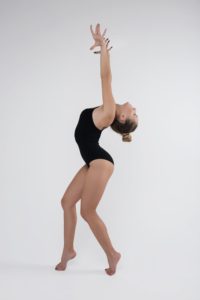
The deduction for relaxed or improper footwork is up to 0.30. The footwork deduction applies to beam and floor routines. Examples of poor footwork include flexed feet, sickled feet, and steps not performed in high releve. Any time a foot leaves the floor, it should be pointed. Make sure the entire foot is pointed, not just the toes. When the gymnast takes a step, she should step toe-ball-heel, and step into high releve. Some judges, especially those with a dance background, are very tough on footwork. Great footwork can really change the entire look of a routine. It will give the routine a polished appearance and set the gymnast apart from her competitors.
Sureness
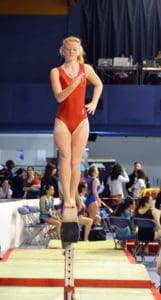
Sureness is a general deduction of up to 0.20. It applies only to balance beam routines. We’ve all seen the beam routine where the gymnast looks terrified. Or the gymnast who is shaking so badly that she looks like she could fall at any time. These are examples of routines that would incur a sureness deduction.
The ideal beam routine would be performed in high releve throughout the routine. The routine should be performed confidently, and the gymnast should appear sure of herself. This deduction ties in with artistry, because if the gymnast appears unsure of herself, she will also likely get an artistry deduction.
What About Composition?
Composition deductions are separate from general deductions, although both types of deductions apply to the routine as a whole. Composition deductions relate to the difficulty of the skills the gymnast performs, rather than the manner in which she performs the routine. A gymnast might get a composition deduction if her difficulty is not up to the expected level. For more information on composition, take a look at these composition articles: Level 8 beam, Level 9 beam, and Level 10 beam. Floor composition is discussed in this series: Level 8 floor, Level 9 floor, and Level 10 floor.
Further Reading
Want to learn more about general deductions and categories? Check out these articles:
How to Demonstrate Artistry in Gymnastics
General Categories for Exemplary Compulsories
References: USA Gymnastics J.O. Code of Points, 2026-2030.